

Islamic Architecture in Montevideo, Uruguay
A surprise discovery that would have made it into my book if I'd known about it three years ago!

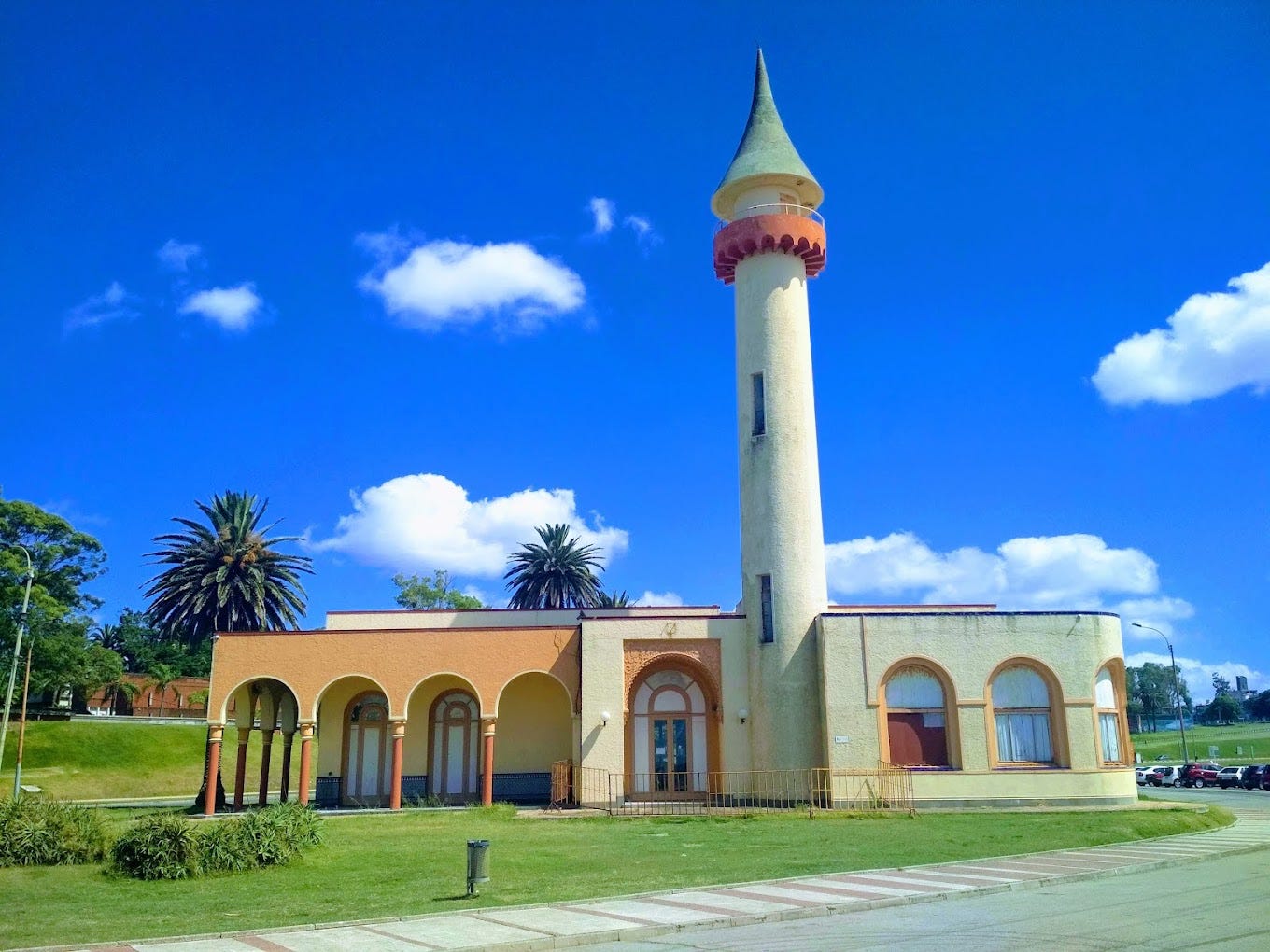
This excellent photo by Ale Acosta popped up in my social media timeline today. “Wow, what a minaret!” is what I thought. An amazing shape! I’d never seen it before.

But, where is it? I had no doubt it was a minaret but after some research, discovered that it is actually part of the Oceanographic and Zoological Museum in Montevideo, capital of Uruguay. It still looks like a minaret to me! I can’t imagine you’d build an oceanographic museum and add a tower like this. So, what’s the story here?
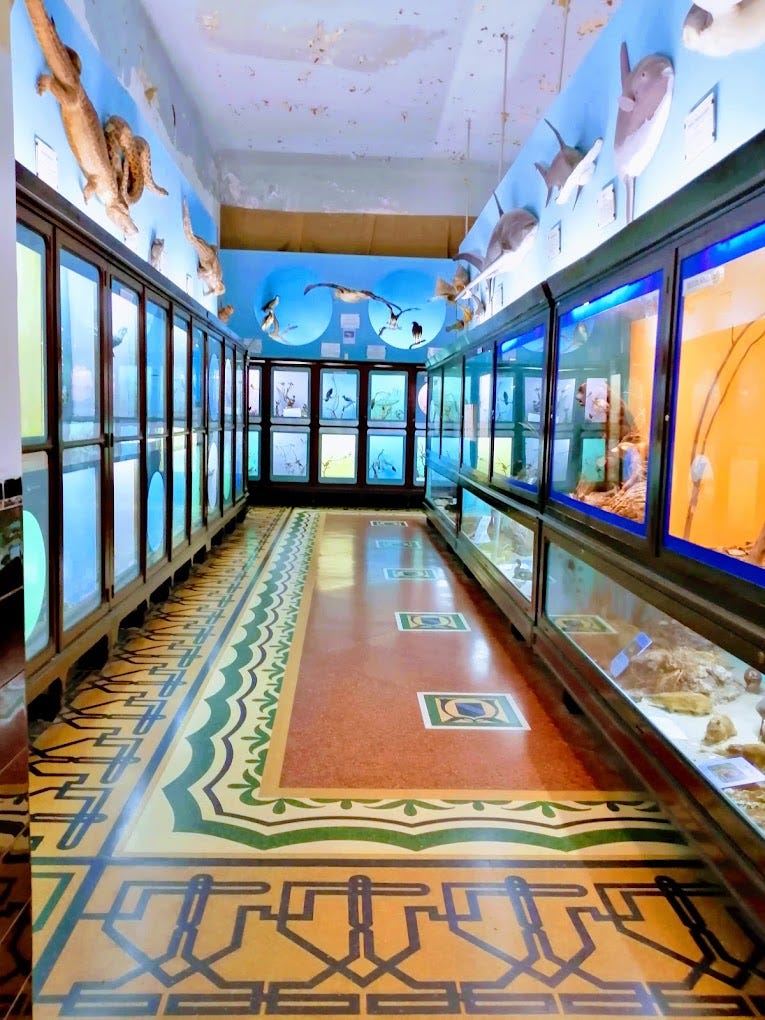
Inside, it’s now full of mammal skeletons, stuffed animals etc. However, there are lots of amazing details that show that the entire building took its inspiration from Islamic architecture. Have a look at this hall, for example, with the original floor. It shows designs that mimic Kufic calligraphy.
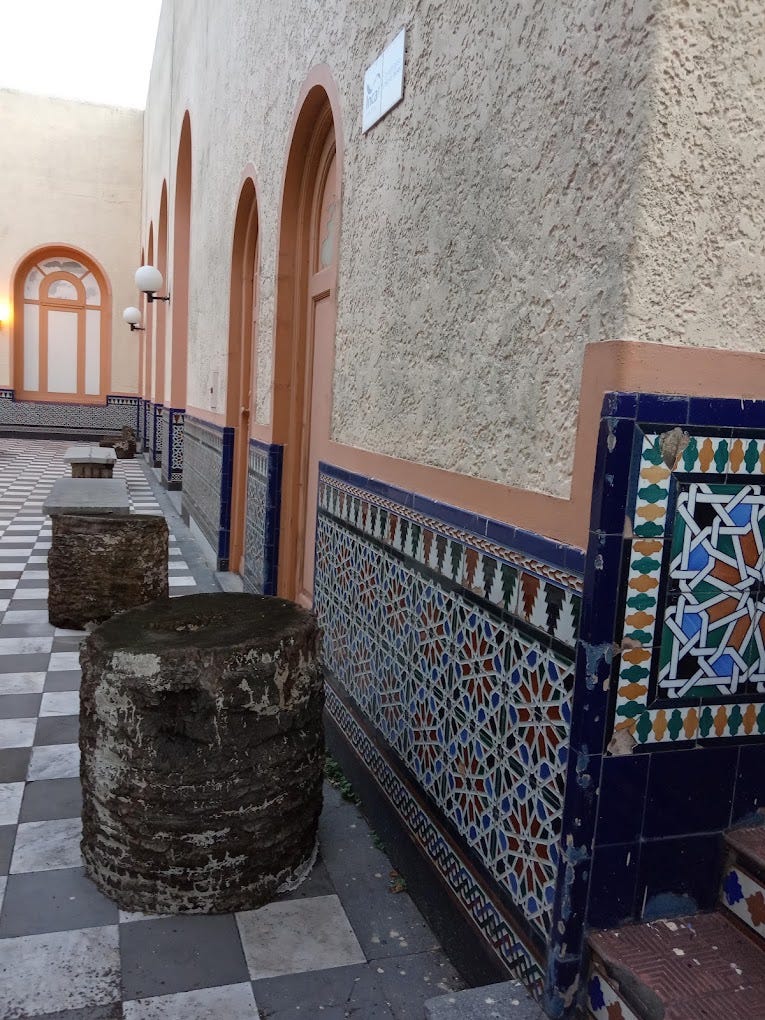
Below are pictures of two courtyards, one still has a central fountain that has now been filled up with soil. The other has ceramic tiles in the style of North African zellige tiles.


This is what it looks like from the outside. This does not look like an oceanographic museum to me!
This is the history of this amazing building:
It was designed in 1925 by architects Canale and Mazzara for their client Visconti Romano, with the intention of building a "Café Morisco". (Morisco is the term used for Spanish Muslims and their descendants who were forcibly converted to Christianity during the Reconquista of Andalusia).
Construction started in 1930 but by 1934 it was turned into an Oceanographic Station when its original commercial purpose failed to succeed. By 1940, it was the Oceanographic Museum.
When I was writing my book “Islamic Architecture:A World History” (Thames & Hudson 2023), I really had to put in a lot of effort to make my chapter on The Americas as interesting and substantial as all the other chapters. Sometimes I’d find an interesting building but couldn’t find good, licensable photos. In all my research I never came across this building. Just to have been able to include a photo of that amazing ‘minaret’ would have made me happy!
Thank you for sharing photos and a description of this beautiful structure!! It is heartwarming to know there are precious places like this, in far flung places, that people where people can be inspired by the beauty of Islamic design.
Your work continues to influence modern interpretations of this exquisite expression of art.
A fascinating story. I love seeing these tidbits about how Islamic design has influenced architecture all over the world.